
Practical resources for wildlife telemetry projects
Technical Articles and Research Guidance


Technology Selection
The most advanced—or most expensive—technology is not necessarily the best choice for every project. The appropriate system depends on the study objectives, animal size, required data, field accessibility, operating life and available budget. Satellite telemetry may offer convenient remote access and detailed location data, but a simpler technology can sometimes meet the research objectives more effectively and economically.
For example, VHF radio tracking is often well suited to survival studies involving dozens or hundreds of animals, particularly when the study area can be reached regularly. VHF transmitters are lightweight, energy-efficient and comparatively affordable, allowing more individuals to be monitored for longer periods.
A mortality sensor can change the transmission pattern after a programmed period without movement, alerting the researcher that an animal may have died. This allows the field team to locate the transmitter promptly while remains and field evidence are still available, potentially helping determine the probable cause of death, including signs of predation.
The best technology is therefore not always the one that produces the greatest amount of data, but the one that most efficiently answers the project’s research questions within its practical constraints.
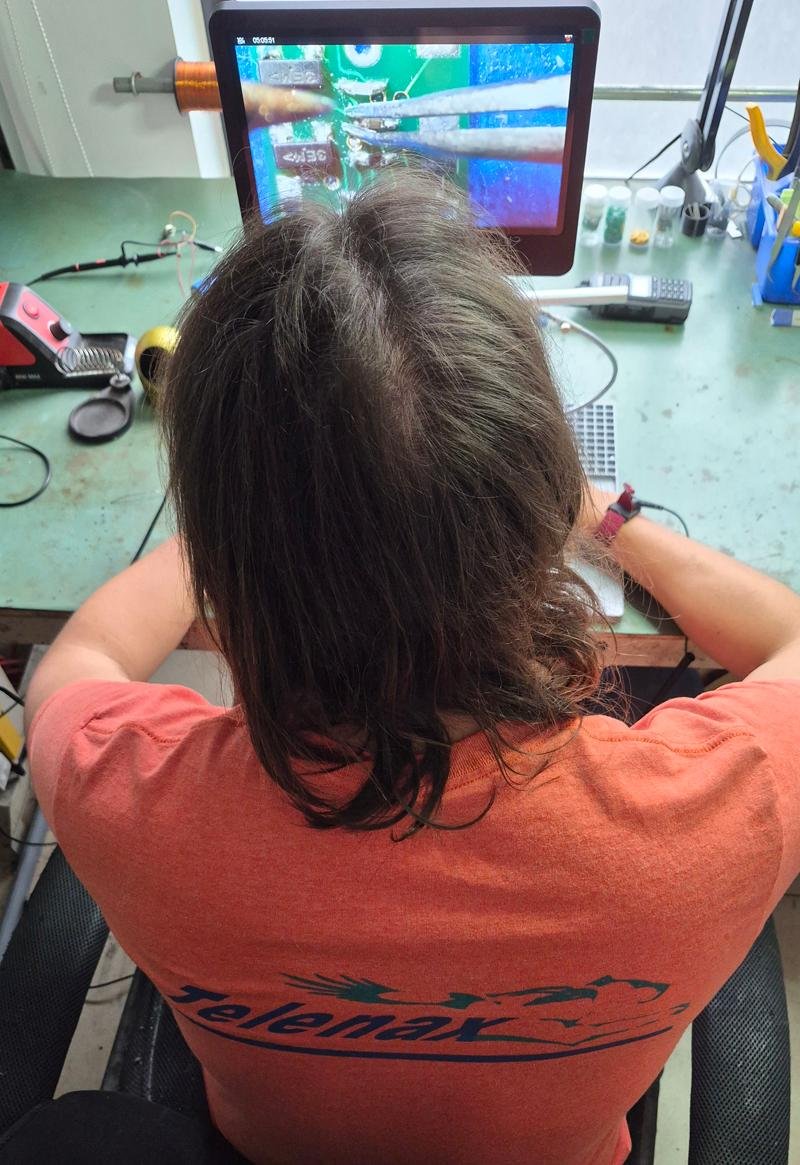
The best results come from combining the researcher’s knowledge of the species, field conditions and study objectives with Telenax’s experience in telemetry engineering and equipment manufacturing.
To evaluate the most appropriate configuration, we normally need to know the species, typical animal weight, study location and environmental conditions, required tracking duration, desired number of GNSS positions if applicable, project objectives, practical limitations and even the approximate date the equipment will be needed. Any additional information that the researcher wants to provide is also very valuable.
Telemetry technology always involves trade-offs among equipment weight, dimensions, battery life, data, communication method, field accessibility and cost. With the information above, we can prepare a customized recommendation based on the project’s actual requirements rather than simply proposing the most advanced or expensive option.
Our primary objective is to support wildlife research and conservation. If we determine that our equipment is not appropriate for a particular project, we will say so honestly. When possible, we will also direct the researcher toward a more suitable technology or source.
Attachment and Comfort
The complete equipment package—including the transmitter, battery, housing, antenna and attachment materials—must be light enough to avoid altering the animal’s normal behavior, movement, energy expenditure or physical condition. This is important not only for animal welfare, but also for scientific validity: data collected from an animal whose behavior has been modified by the equipment may not accurately represent its natural activity.
There is no single “international biologist committee” standard — the following percentages come from literature of species-specific studies, aerodynamic/biomechanical models, and guideline documents (e.g., American Society of Mammalogists, American Ornithologists’ Union).
Summary Table
| Taxon | Commonly cited max (% body mass) | Primary / originating source |
| Birds | 3% (sometimes up to 5%) | Caccamise & Hedin (1985) |
| Terrestrial mammals (general) | 5%; up to 10% only with species-specific justification | Wilson et al. (1996), adopted by ASM guidelines (Sikes et al. 2011, 2016) |
| Bats | 5% (up to 10% short-term) | Aldridge & Brigham (1988); Wilkinson & Bradbury (1988) |
| Lizards | 7.5% | Knapp & Abarca (2009) |
| Turtles/tortoises | ≤5% (some studies 4–6%) | Boarman et al. (1998) |
| Snakes | Typically 2–5% (implanted) | Reinert & Cundall (1982) methodology; percentage varies by study |
| Crocodilians | <2% (observed field practice) | Mascarenhas-Junior et al. (2023) |
| Fish | 2% (“rule of thumb”), extendable to 6–12% | Mellas & Haynes (1985); Winter (1996); Smircich & Kelly (2014) |
Details by taxon
Birds — 3% The number traces to an aerodynamic (not empirical/behavioral) model, not a field experiment: Caccamise & Hedin used flight-power calculations to estimate how much a transmitter load reduces a bird’s power surplus, and found the effect scales with body size — a small bird tolerates a higher percentage than a large one. Later reviews (Fair et al. 2010; Barron et al. 2010) found the studies behind the “3–5% rule” are largely circular citations of each other rather than a validated universal threshold.
Terrestrial mammals — 5–10% The American Society of Mammalogists’ research guidelines (Sikes et al. 2011, 2016) state transmitters should generally be <5–10% of body mass, citing Wilson et al. (1996).
Bats — 5% Aldridge & Brigham’s classic experiment tested how added mass affected maneuverability in an insectivorous bat (Myotis yumanensis, ~60 g) flying through obstacle courses, and concluded bats under ~70 g should carry no more than 5% of body mass — a figure that became “de facto best practice” (per O’Mara et al. 2014’s review of 50 years of bat tracking). Some authors (Wilkinson & Bradbury 1988; Sikes & Gannon 2011) allow up to 10% for short-duration studies.
Lizards — 7.5% Knapp & Abarca tested green iguana hatchlings with transmitter loads from 2.5% to 15% of body mass, measuring sprint/climb speed and field survival. Locomotor performance and survival declined more sharply above ~10%, and 7.5% became the commonly adopted ceiling for arboreal/cryptic lizard species in subsequent studies (e.g., Gerner et al. 2012 on Texas alligator lizards).
Turtles/tortoises — ~5% Boarman et al.’s review of turtle transmitter attachment techniques recommended keeping combined transmitter + epoxy mass at or below 5% of body mass, a figure widely adopted afterward (e.g., desert tortoise and mud turtle studies confirm <5%). Some box turtle studies report 4–6% in practice.
Snakes — typically 2–5%, implanted Unlike other reptiles, snakes are usually tagged via surgical intracoelomic implantation following Reinert & Cundall’s (1982) technique, rather than external attachment. There isn’t one master percentage citation for snakes the way there is for lizards or bats — published field studies range widely, from <0.6% (large-bodied anacondas) to ~2–5% (rattlesnakes, indigo snakes), generally trending toward “as low as possible” given the invasiveness of implantation.
Crocodilians — <2% Mascarenhas-Junior, Correia & Simões’ 2023 systematic review of 72 published crocodylian telemetry studies (1970–2022) found that in every study reviewed, transmitter weight was under 2% of body mass — making this an empirically observed field practice/norm rather than a formally derived threshold from a dosing-style experiment.
Fish — 2% (“rule”), but conservative The “2% rule” is usually attributed to Winter (1996), but the underlying experimental work is Mellas & Haynes (1985), who found that externally or internally attached telemetry transmitters reduced swimming performance and increased tag loss/infection risk in rainbow trout and white perch. Later work by Smircich & Kelly (2014), explicitly titled “Extending the 2% rule,” found that tags up to 6–12% of body mass did not impair swimming performance in brook trout, though tag retention dropped sharply above ~7%, concluding the 2% figure is a highly conservative, not a hard physiological, limit.
The safest approach is to use the smallest and lightest configuration capable of meeting the study objectives. The final limit should be defined by the project’s qualified biological and veterinary personnel, supported by relevant published guidance and, if possible, preliminary testing before full deployment.
Full references
- Aldridge, H.D.J.N. & Brigham, R.M. (1988). Load carrying and maneuverability in an insectivorous bat: a test of the 5% “rule” of radio-telemetry. Journal of Mammalogy, 69(2), 379–382.
- Boarman, W.I., Goodlett, T., Goodlett, G., & Hamilton, P. (1998). Review of radio transmitter attachment techniques for turtle research and recommendations for improvement. Herpetological Review, 29(1), 26–33.
- Caccamise, D.F. & Hedin, R.S. (1985). An aerodynamic basis for selecting transmitter loads in birds. Wilson Bulletin, 97(3), 306–318.
- Knapp, C.R. & Abarca, J.G. (2009). Effects of radio transmitter burdening on locomotor ability and survival of iguana hatchlings. Herpetologica, 65(4), 363–372.
- Mascarenhas-Junior, P.B., Correia, J.M.S., & Simões, P.I. (2023). Tracking crocodylia: a review of telemetry studies on movements and spatial use. Animal Biotelemetry, 11, 21.
- Mellas, E.J. & Haynes, J.M. (1985). Swimming performance and behavior of rainbow trout (Salmo gairdneri) and white perch (Morone americana): effects of attaching telemetry transmitters. Canadian Journal of Fisheries and Aquatic Sciences, 42(3), 488–493.
- Reinert, H.K. & Cundall, D. (1982). An improved surgical implantation method for radio-tracking snakes. Copeia, 1982(3), 702–705.
- Sikes, R.S. and the Animal Care and Use Committee of the American Society of Mammalogists (2011, updated 2016). Guidelines of the American Society of Mammalogists for the use of wild mammals in research. Journal of Mammalogy, 92(1), 235–253 / 97(3), 663–688.
- Smircich, M.G. & Kelly, J.T. (2014). Extending the 2% rule: the effects of heavy internal tags on stress physiology, swimming performance, and growth in brook trout. Animal Biotelemetry, 2, 16.
- Wilkinson, G.S. & Bradbury, J.W. (1988). Radiotelemetry: techniques and analysis. In Ecological and Behavioral Methods for the Study of Bats, Kunz, T.H. (ed.), Smithsonian Institution Press.
- Wilson, R.P., Grémillet, D., Syder, J., et al. (1996/2002). Studies referenced in ASM guidelines re: general device-load thresholds. (Often cited jointly with Wilson et al. 2002, Marine Ecology Progress Series.)
- Winter, J. (1996). Advances in underwater biotelemetry. In Fisheries Techniques, Murphy, B.R. & Willis, D.W. (eds.), American Fisheries Society.
Unlike the weight percentages (which show up in the literature as specific numeric thresholds), dimensional guidance is mostly qualitative and principle-based rather than expressed as strict ratios. The guidance comes from attachment-technique papers, collar/harness design studies, and veterinary case reports describing what goes wrong when devices are the wrong size or shape.
Summary Table
| Claim on slide | What the literature actually supports | Key sources |
| Mammal collar length ≈ neck diameter or less | Keep the housing within the body profile, preferably no longer than the neck diameter and definitely not wider than the shoulders. | Kenward (2001) Manual for Wildlife Radio Tagging |
| Mammal collar max width ≈ shoulder width | Necks widen toward the shoulders/withers in many species; collars positioned or sized too close to the shoulder cause chafing, rubbing, and movement-related injury | Collins et al. (2014); Portas/potoroid vet literature |
| Short collar/module height, won’t drag | Short-necked, prominent-shouldered, or burrowing/small species are prone to collar snagging, entrapment, and injury if devices are bulky or tall | RIC (1998) BC Wildlife Telemetry Standards; veterinary case reports |
| Bird harness narrow enough not to compromise wing movement | Harness type and loop dimensions are designed specifically to leave the wing/flight muscles free; poor fit measurably reduces flight performance | Rappole & Tipton (1991); Naef-Daenzer (2007); recent leg-loop vs. backpack comparisons |
| “In general, as small as possible” | Explicit, repeated recommendation across nearly all wildlife telemetry guideline documents | RIC (1998); Casper (2009); Mascarenhas-Junior review family of papers |
Details
Mammals — Device Dimensions Relative to the Neck As a practical design guideline, the electronic housing should remain within the animal’s normal body profile. Its length should preferably be comparable to, or smaller than, the neck diameter, and it should not project beyond the shoulder width. A low-profile housing is also preferable to reduce rubbing, snagging and contact with the ground or vegetation. Kenward’s A Manual for Wildlife Radio Tagging (2001) is widely referenced for mammal-collar design, construction and fitting. However, the dimensional guideline above is a practical engineering interpretation rather than a numerical rule quoted directly from that publication.
Mammals — width relative to shoulder width Collins et al. (2014), studying VHF/GPS collars on free-roaming horses, found that horse necks widen from the head toward the shoulders/withers, and that collars attached (or sized) too close to that wider point had “high potential for significant movement and associated injury.” Veterinary literature on Australian potoroid marsupials similarly notes that their short necks and prominent shoulders make them especially prone to collar-associated alopecia, dermatitis, and ulceration from tight-fitting or excessively wide collars. A case report by Ferreira et al. (2013) also documents collar-induced dermatitis from a poorly sized radio-collar, reinforcing that width/fit relative to the shoulder and neck taper is a recognized injury pathway, not just a design preference.
Mammals — short height to avoid dragging/snagging The British Columbia government’s Wildlife Radio-telemetry Standards (Resources Inventory Committee, 1998) — a formal technical standards manual — flags “the possibility of the collar getting caught up in vegetation” as one of the most important attachment considerations, explicitly noting this is “particularly important…with small mammals (especially those that burrow).” This is the closest documented source for the “short height so it won’t get dragged” principle, though it’s framed there as snagging risk rather than a specific height measurement.
Birds — narrow enough not to compromise wing movement Rappole & Tipton’s (1991) classic “figure-8” leg-loop harness was designed specifically to sit over the synsacrum with 1–2 mm of play, avoiding the wings and flight muscles entirely. Naef-Daenzer (2007) went further and derived an allometric equation to calculate correct leg-loop harness dimensions directly from a bird’s body mass, so researchers can size harnesses to fit without impeding movement. More recent comparative work (e.g., the 2023 Movement Ecology study on five soaring species) directly measured flight performance and found birds fitted with leg-loop harnesses (which leave the wings and flight muscles untouched) climbed faster and glided more efficiently than birds fitted with backpack harnesses that sit across the chest/wing area — direct empirical evidence that harness dimension/placement relative to the wing affects flight.
“In general, as small as possible” This is the single most consistently repeated recommendation across the entire telemetry-guidelines literature. The BC RIC (1998) manual states it as an explicit numbered rule (“Use the smallest possible transmitter package when instrumenting any animal”), and it’s echoed in nearly every review cited in the weight-percentage report (Casper 2009; the 2024 Frontiers review on health effects of tracking devices, etc.).
Full references
- Collins, G.H., Petersen, S.L., Carr, C.A., & Pielstick, L. (2014). Testing VHF/GPS collar design and safety in the study of free-roaming horses. PLoS ONE, 9(9), e103189.
- Ferreira, G.A., Pinto, M.L., Nakano-Oliveira, E., & Genaro, G. (2013). Dermatitis prompted by a collar employed in radio-telemetry monitoring. Animal Welfare, 22(4).
- Kenward, R.E. (2001). A Manual for Wildlife Radio Tagging (2nd ed.). Academic Press.
- Naef-Daenzer, B. (2007). An allometric function to fit leg-loop harnesses to terrestrial birds. Journal of Avian Biology, 38(4), 404–407.
- Rappole, J.H. & Tipton, A.R. (1991). New harness design for attachment of radio transmitters to small passerines. Journal of Field Ornithology, 62(3), 335–337.
- Resources Inventory Committee (1998). Wildlife Radio-telemetry: Standards for Components of British Columbia’s Biodiversity No. 5. BC Ministry of Environment, Lands and Parks.
- Effect of harness design for tag attachment on the flight performance of five soaring species (2023). Movement Ecology, 11, 27.
- Veterinary reference chapter on potoroid marsupial telemetry (collar-associated injury discussion), ScienceDirect Topics compilation, drawing on marsupial medicine/rehabilitation literature (e.g., Portas, T.J. in Fowler’s Zoo and Wild Animal Medicine Current Therapy).
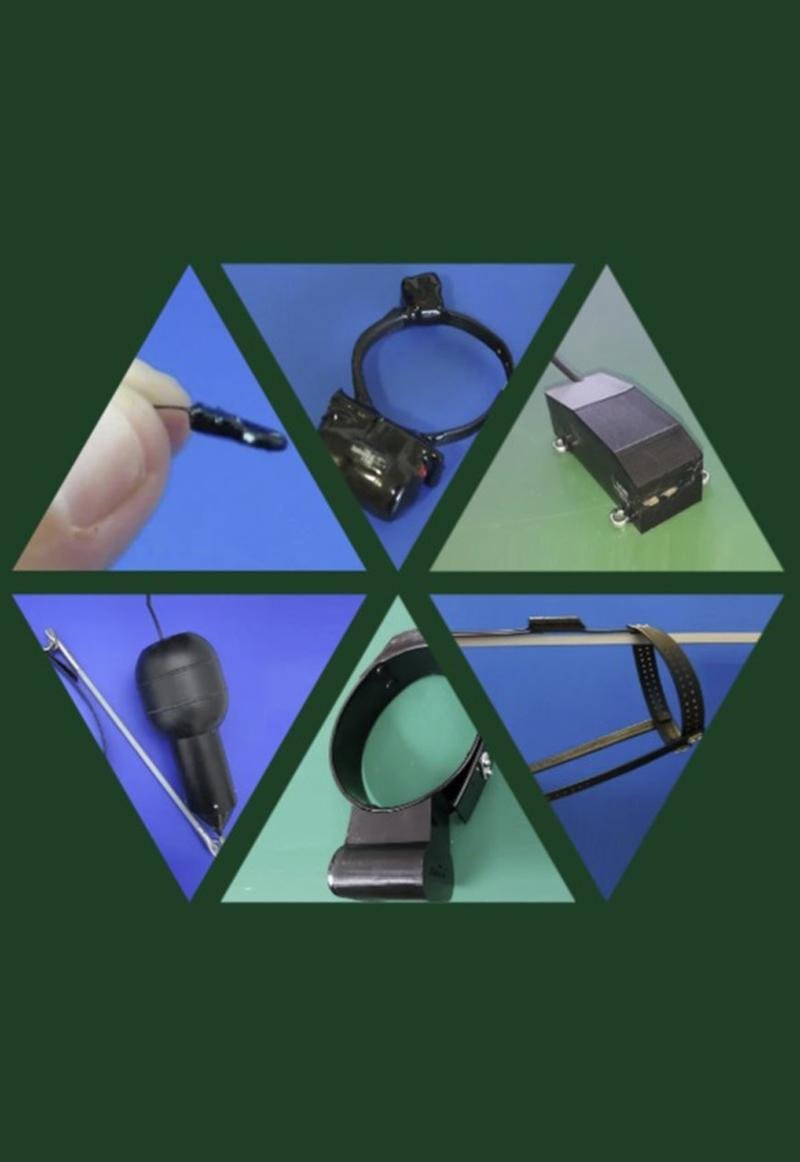
The most appropriate attachment method depends on the species, anatomy, body size, behavior, habitat, expected deployment period and required tracking technology. Telenax can provide technical guidance based on previous projects, but the final method should be reviewed and approved by the project’s qualified biological and veterinary personnel. More detailed examples are available in our By Study Animal section.
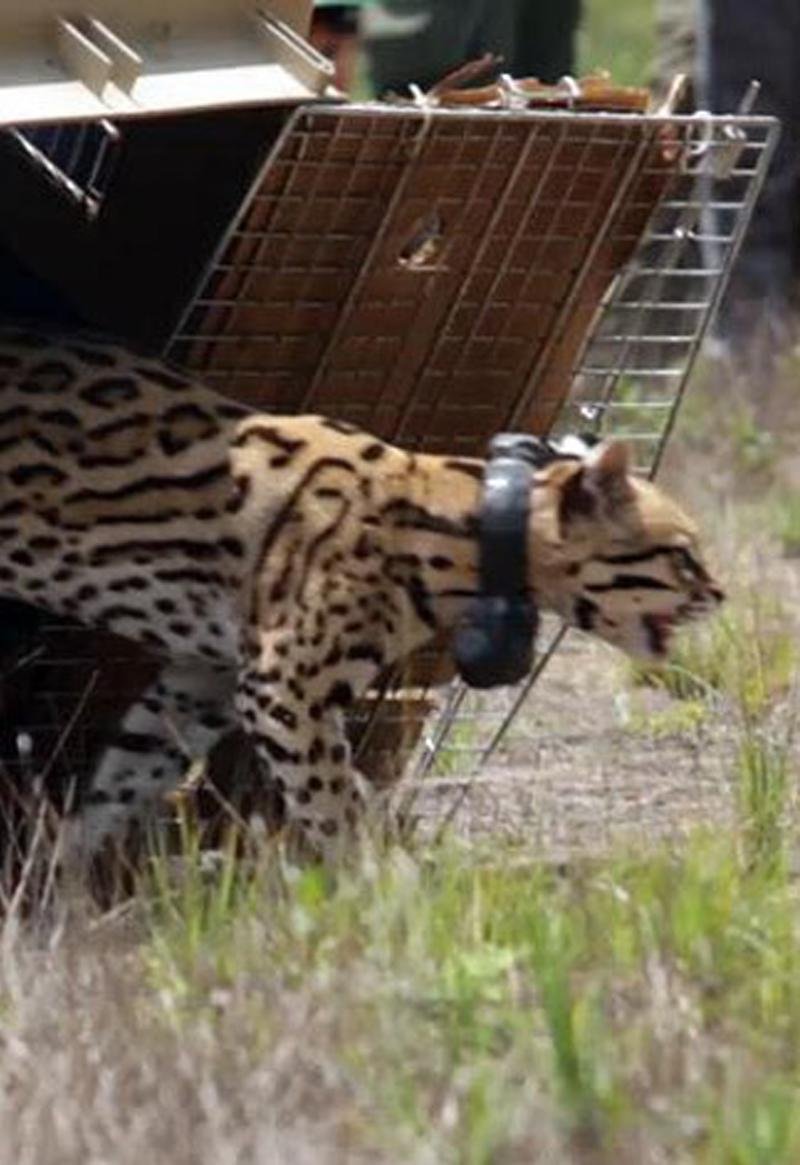
For terrestrial mammals, collars are the most common attachment method, but some species require specialized configurations. Sloths are generally better suited to backpack units, anteaters to custom harnesses, and pangolins to units secured to selected dorsal scales. Bats may use glue-on or lightweight backpack units. Species such as otters and armadillos require a more detailed, project-specific evaluation.
For birds, backpack harnesses are widely used, while glue-on units may be more suitable for the smallest species or short-duration studies. Large flightless birds may use specialized collars, parrots may require reinforced collar designs, and condors or vultures may be suitable for patagial-tag configurations.
For reptiles and amphibians, the available methods vary considerably. Crocodilian units may be secured over the nuchal shield region, snakes are generally better suited to implanted transmitters for medium- or long-term studies, turtles commonly carry units attached to the carapace, and lizards may use backpack-style or glue-on configurations. Frogs and toads are often fitted with lightweight waist-belt attachments.
We recommend contacting us with the species, typical animal weight, study objectives and field conditions so that we can evaluate the most appropriate available configuration.
Deployment & Troubleshooting
A telemetry collar must be secure enough to remain in place, but loose enough to avoid restricting breathing, swallowing, movement or normal neck function. There is no single fitting rule that applies to every species, so the final adjustment should consider the animal’s anatomy, behavior, age, body condition and expected changes in neck circumference.
Two factors are particularly important:
1. The collar must not be able to slip over the head.
Check the fit by gently attempting to move the collar toward and over the head. If it can pass over the head during fitting, the animal may eventually remove it in the field. The collar should also be fitted so that a forelimb, paw or lower jaw cannot become trapped beneath it, as entanglement may cause serious injury.
2. The collar must not be excessively tight.
It must allow normal breathing, swallowing, feeding, neck movement and posture without causing pressure, rubbing or discomfort. Seasonal changes, body-condition changes and temporary increases in neck size—such as those associated with growth, reproduction or weight gain—must also be considered.
The commonly used “one-finger rule,” in which one finger can pass between the collar and the neck, may provide a rough starting point for some animals. However, it is not a universal standard and may be inappropriate for very small or very large species. The fit should always be evaluated according to the particular animal and collar design.
Conventional fixed-size collars require special caution on juveniles or animals whose necks are expected to grow substantially during the study. Depending on the species, alternatives may include ear tags, expandable collars, flexible materials, breakaway links or another attachment method designed for growth.
Collars should be fitted by experienced biological or veterinary personnel and inspected after deployment whenever the study protocol allows. The final configuration should minimize the risks of slipping, tightening, abrasion, entanglement and interference with normal behavior.
Telenax provides technical guidance throughout the equipment-selection, preparation, deployment and data-retrieval stages. We consider careful planning and pre-deployment testing especially important, as many field problems can be prevented by confirming the configuration, programming, attachment and operating procedures before the equipment is placed on the animal.
Our support includes detailed manuals, instructional videos and direct assistance with technical questions or unexpected equipment behavior. When additional guidance is needed, we can arrange video calls to review procedures, clarify doubts and help troubleshoot the system. All this is Free of Charge and almost without limits, because our greatest interest is the success of your project.
We encourage researchers to contact us as often as necessary while preparing for deployment. Our objective is to help users understand the equipment thoroughly and operate it as reliably and effectively as possible under their particular field conditions.
Frequently Asked Questions
Telenax has supplied wildlife-telemetry equipment to researchers and institutions in more than 80 countries. Unless otherwise specified by the customer, we normally ship through established international courier services such as DHL, FedEx or UPS.
Import procedures, permits, duties, taxes and customs restrictions vary by country. We can provide the commercial and technical documentation normally required for the shipment and are open to help as much as we can for particular needs. However, the recipient is responsible to comply with ocal import requirements and paying applicable taxes or customs charges.
Before placing any international order of high value, we recommend contacting DHL, FedEx or UPS in the destination country and providing them with a description of the equipment and its estimated value. Ask whether any restrictions, permits, taxes or special clearance procedures may apply. When the information provided by the courier is incomplete or uncertain, consulting a qualified customs broker in the destination country is strongly recommended.
In some countries, an authorized distributor may be available to manage the import process and supply the equipment locally.
Feel free to contact us with your destination country so that we can share our recommendations and any relevant experience we may have.
Our standard manufacturing lead time is approximately eight weeks, beginning once all technical specifications and order details have been confirmed.
Expedited production may be available—in some cases within one week—for an additional fee based on the required schedule, product configuration and current production capacity.