Freshwater species
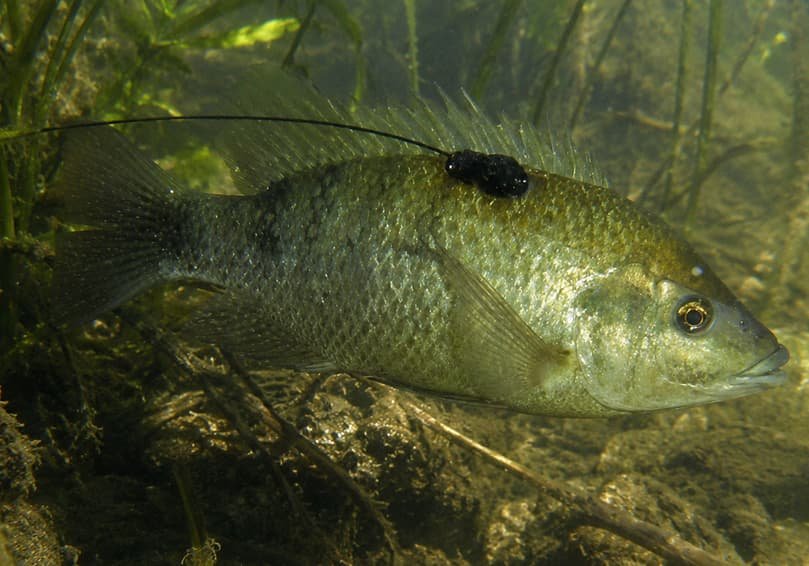
Fish fitted with a VHF Radio-Transmitter
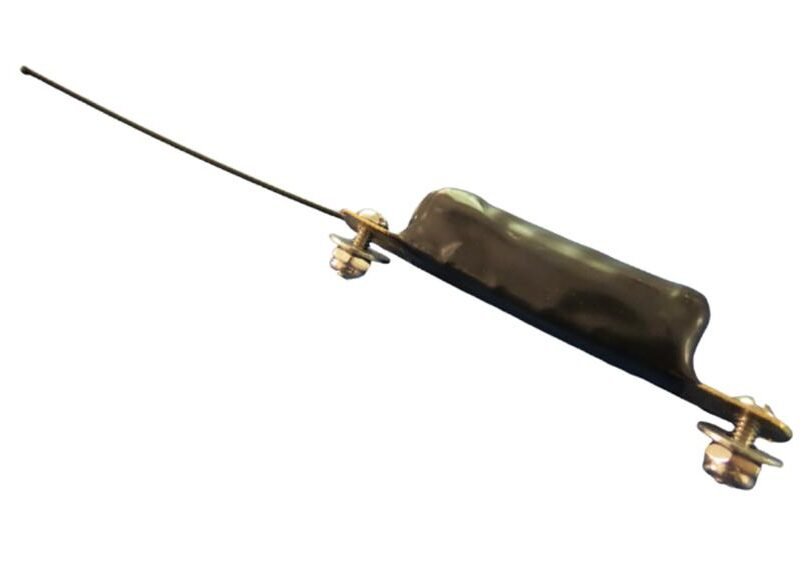
VHF Radio-Transmitter with Screws
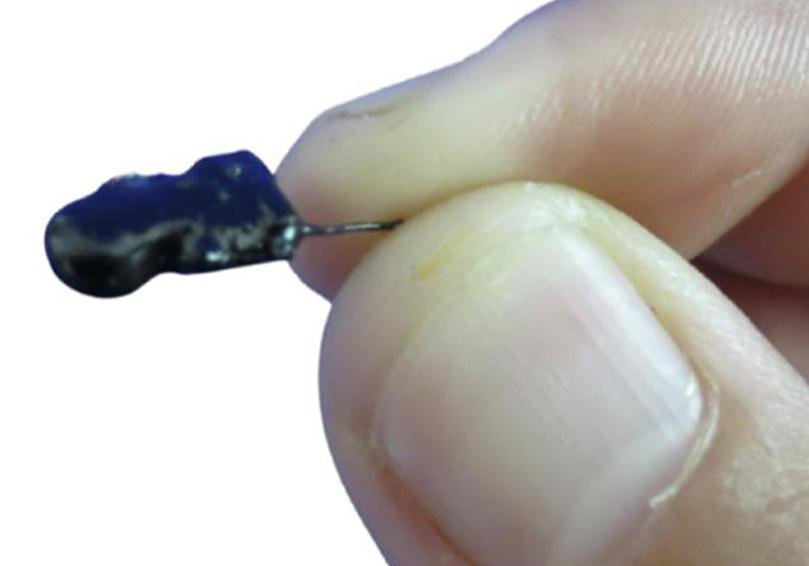
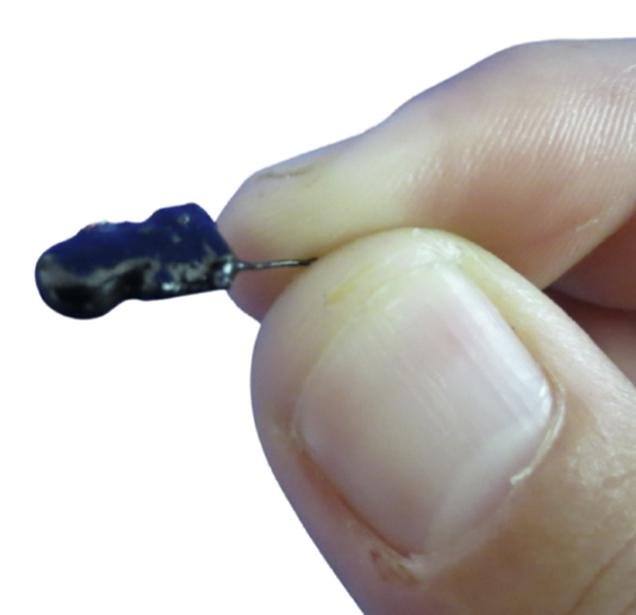
Small VHF Radio-Transmitter
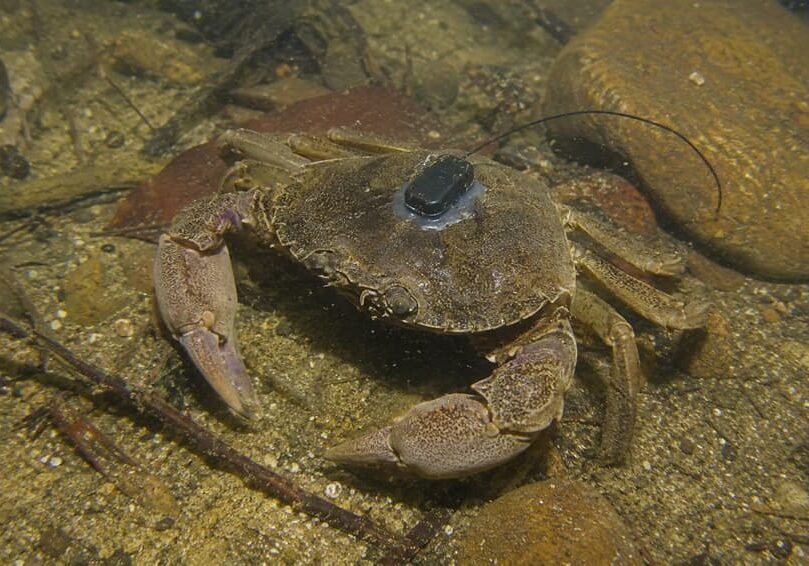
Crab fitted with a VHF Radio-Transmitter
Operation and Configuration:
Freshwater fish and other aquatic species can be studied using VHF radio-tracking transmitters. The most suitable attachment method depends on the species, body size, anatomy, behavior, study duration and field conditions.
Glue-based external attachment is more commonly used for some mollusks and crustaceans.
For fish, established options include external attachment, gastric insertion, internal implantation and, in certain species and life stages, oviduct insertion. External units may be secured through a mounting platform, often using wires passed through the dorsal musculature with plates intended to reduce chafing. Gastric insertion places the transmitter through the esophagus and into the stomach, with the antenna or lead positioned through the opercular opening when required. This can be useful for selected short-term applications. In some upstream-migrating salmon, where feeding has largely ceased, a suitably designed VHF transmitter may also be introduced through the mouth for temporary tracking, provided the procedure is appropriate for the species and study protocol.
As a general guideline, the complete transmitter package for fish is often limited to approximately 2% of the animal’s body weight, although the appropriate limit must be determined for the species, life stage, body condition and study design.
Internal implantation is generally considered when a secure medium- or long-term attachment is needed. The transmitter is placed inside the body cavity through a surgical incision, with the antenna routed externally if required.
GNSS is generally not suitable for underwater tracking because satellite-navigation signals do not penetrate water effectively. VHF radio signals are also severely attenuated underwater, but depending on water depth, conductivity, antenna orientation, transmitter power and receiving antenna position, they may still provide useful detection distances. Performance is usually best when the transmitter is closer to the surface, in shallow freshwater, or when the receiving antenna is positioned appropriately.
Detection is generally more effective when the receiving antenna is oriented as high and as vertical to the surface as possible, for example with the aid of aerial vehicles. A receiving antenna positioned above, or as nearly directly over the fish as field conditions permit, minimizes the distance the signal must travel through the water before reaching the air. This can substantially improve reception compared with a more horizontal path through the water.
TX – VHF Radio Tracking
The most lightweight and highly energy-efficient and proven technology for locating animals directly in the field.
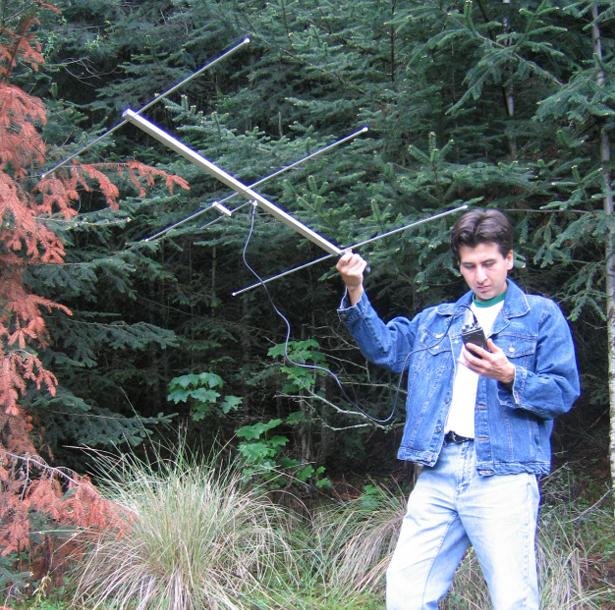
Transmitters (TX) emit pulsed electromagnetic signals at user-defined specific frequencies, alternating with silent intervals. Researchers detect these signals using a handheld receiver and a directional antenna to find the signal’s direction. Drawing lines from two different points toward the signal creates an intersection that pinpoints the transmitter’s location.
Main advantages:
- Activity, inactivity and mortality sensing may be available
- Very low power consumption
- Very small and lightweight
- Long operating life
- No extra service costs
- Direct field location at any time
- VHF localization is often included as a supporting feature in GPS-based tracking systems
Important considerations:
- Researchers must actively search for the signal whenever a location or status check is required
- Practical detection range depends strongly on terrain, vegetation, antenna, animal behavior and transmitter configuration
- VHF provides directional location information rather than automatically recorded GPS positions
- VHF Receiver and VHF Directional antenna are required
Best for:
- Survival, dispersal and presence-monitoring studies
- Cost-sensitive projects
- Species that do not move too far (from hundreds of meters to a few kilometers)
- Small species that cannot carry heavier GPS-based equipment
- When researchers can easily conduct field searches
- When low weight, long operating life is a priority
- Detect presence in the area at any desired moment