Anura (Frog and Toad)
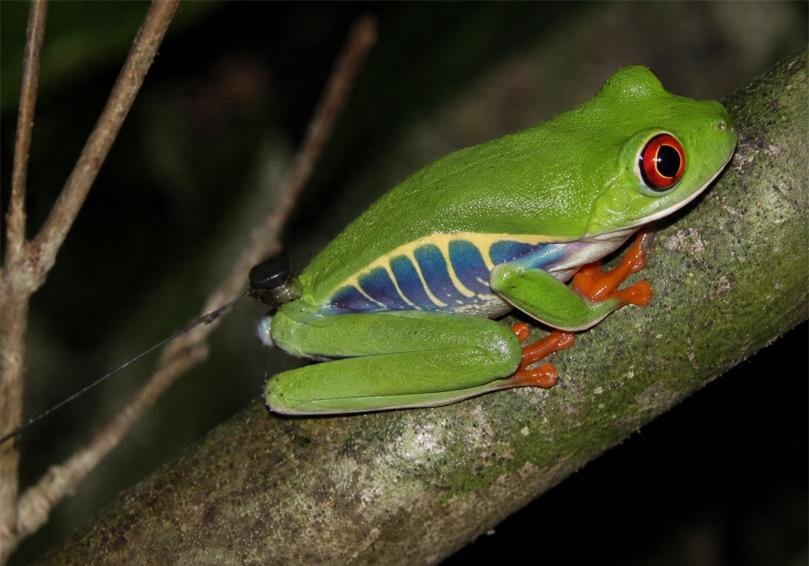
Red-eyed tree frog fitted with a VHF Radio tracking unit
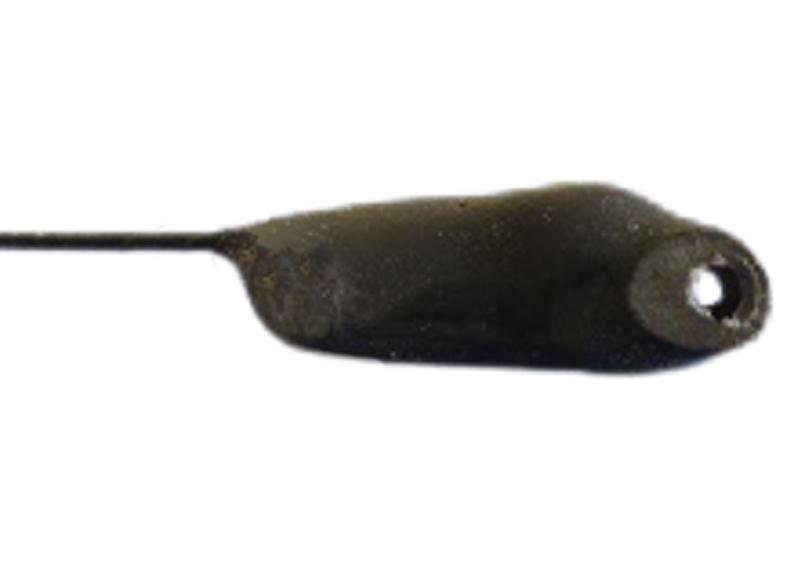
VHF Tail-mount for Anura with hole
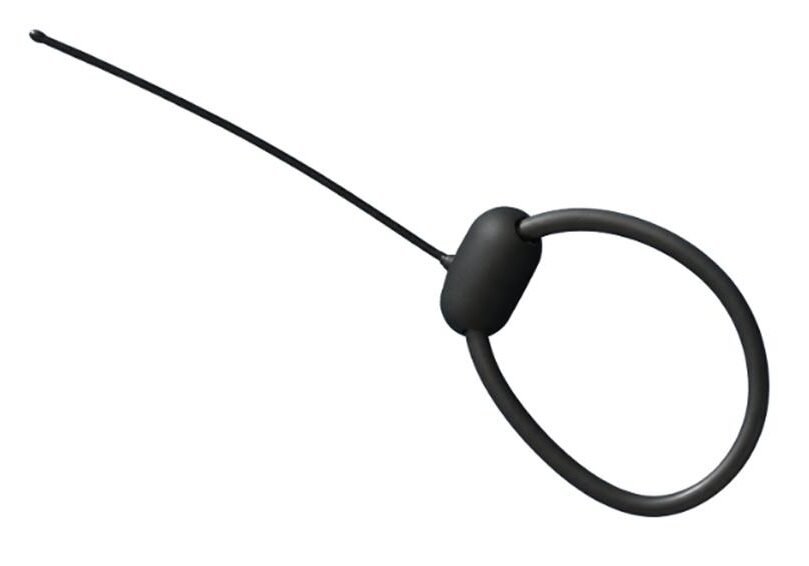
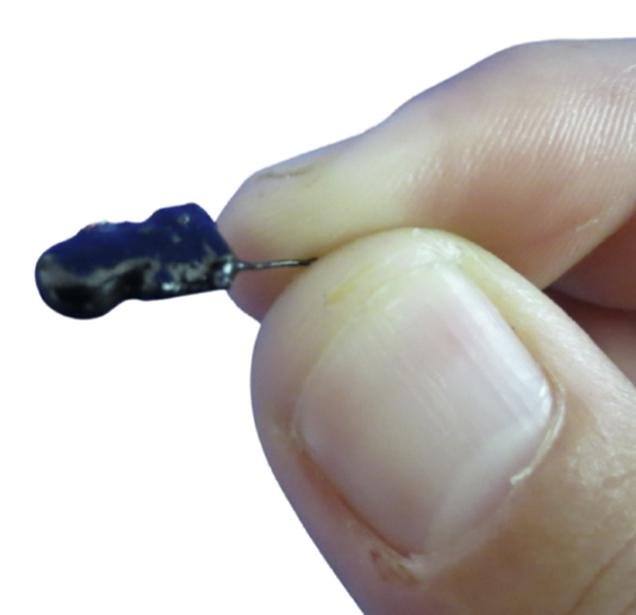
VHF Tail-mount for Anura with soft latex-rubber tubing
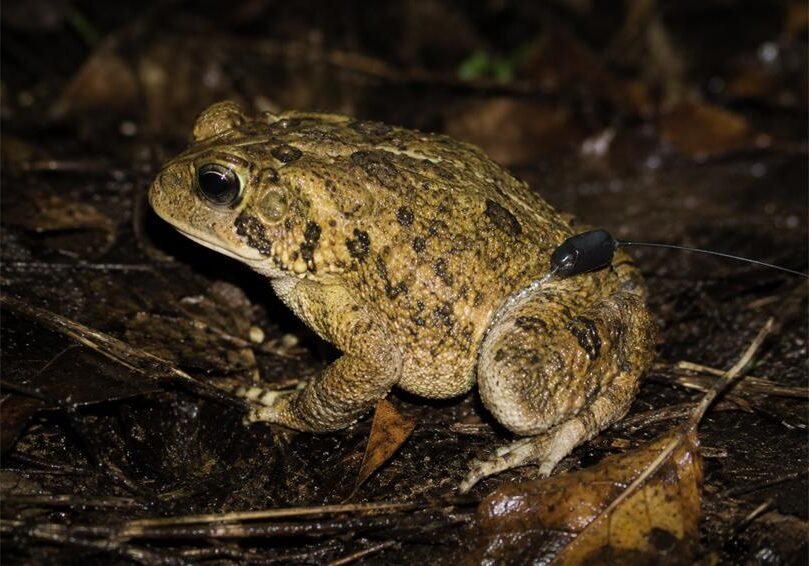
Toad fitted with a VHF Radio tracking unit
Typical species:
Paedophryne amauensis, Eleutherodactylus iberia, Dendrobates tinctorius, Oophaga pumilio, Agalychnis callidryas, Lithobates catesbeianus, Rana temporaria, Bufo bufo, Anaxyrus boreas, Epidalea calamita, Ceratophrys ornata, Phrynomantis bifasciatus, Rhinella marina, Conraua goliath, or Pyxicephalus adspersus
Attachment:
For anurans—including frogs and toads—a lightweight waist-belt attachment is often the most practical external option. As a general guideline, the complete tracking package may be limited to approximately 7% of the animal’s body weight, although the appropriate ratio should always be confirmed for the species, body condition and study design.
A commonly used configuration consists of soft latex-rubber tubing reinforced internally with a strong thread. This combination provides flexibility, helps distribute pressure around the body and can offer sufficient durability for field use while remaining relatively comfortable for the animal. We provide the VHF transmitter with a hole so the researcher can use his own selection of tubing and thread.
The belt must be fitted carefully so that it remains secure without restricting breathing, hind-limb movement, feeding or normal posture. Because anurans have delicate and permeable skin, the material, tension, contact area and expected deployment period should be evaluated closely.
Tracking options:
VHF radio-tracking
TX – VHF Radio Tracking
The most lightweight and highly energy-efficient and proven technology for locating animals directly in the field.
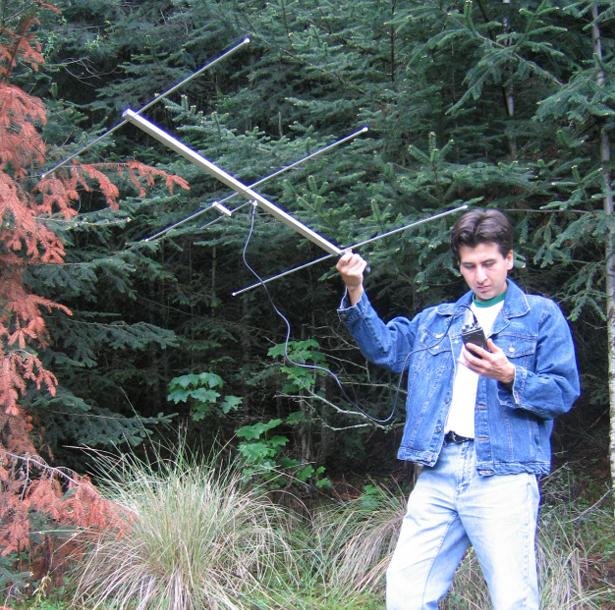
Transmitters (TX) emit pulsed electromagnetic signals at user-defined specific frequencies, alternating with silent intervals. Researchers detect these signals using a handheld receiver and a directional antenna to find the signal’s direction. Drawing lines from two different points toward the signal creates an intersection that pinpoints the transmitter’s location.
Main advantages:
- Activity, inactivity and mortality sensing may be available
- Very low power consumption
- Very small and lightweight
- Long operating life
- No extra service costs
- Direct field location at any time
- VHF localization is often included as a supporting feature in GPS-based tracking systems
Important considerations:
- Researchers must actively search for the signal whenever a location or status check is required
- Practical detection range depends strongly on terrain, vegetation, antenna, animal behavior and transmitter configuration
- VHF provides directional location information rather than automatically recorded GPS positions
- VHF Receiver and VHF Directional antenna are required
Best for:
- Survival, dispersal and presence-monitoring studies
- Cost-sensitive projects
- Species that do not move too far (from hundreds of meters to a few kilometers)
- Small species that cannot carry heavier GPS-based equipment
- When researchers can easily conduct field searches
- When low weight, long operating life is a priority
- Detect presence in the area at any desired moment