VHF Status Transmitters for Live-Capture Traps
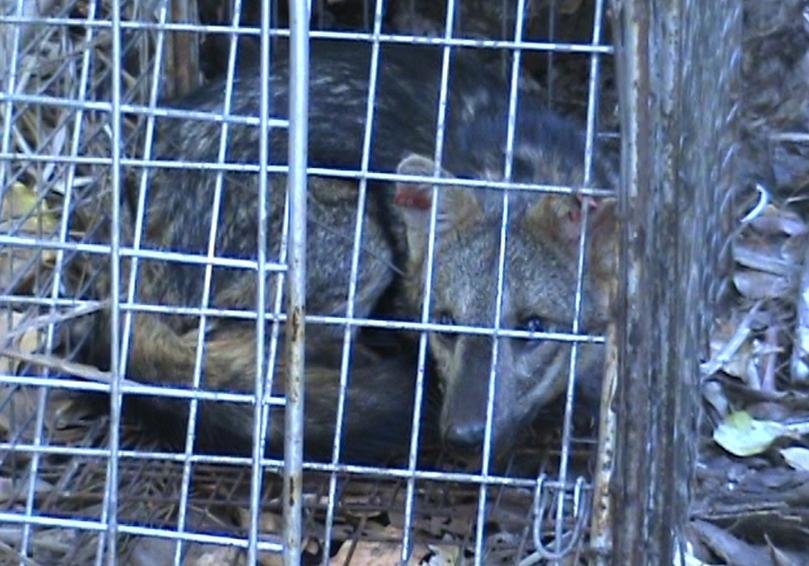
Live-capture cage trap used in wildlife research
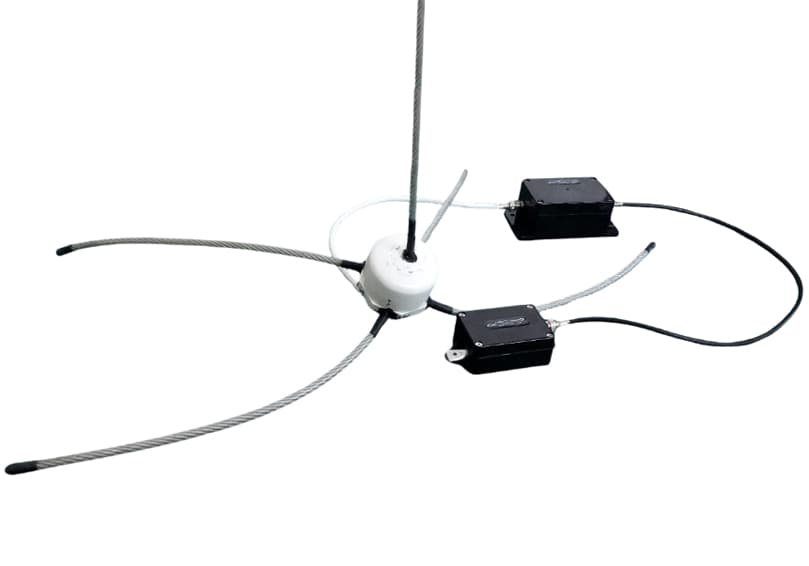
Modular VHF trap-status transmitter
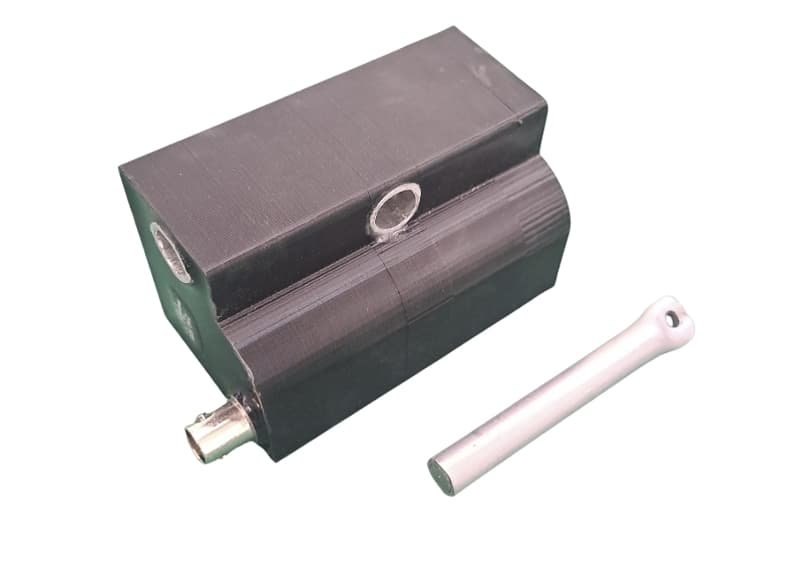
Compact VHF trap-status transmitter
Operation and Configuration:
Telenax provides compact VHF status transmitters designed for attachment to compatible live-capture cage traps, including Tomahawk-style traps. The system helps researchers monitor trap status remotely and reduce the time an animal remains inside the trap.
While the trap remains inactive, the unit operates in standby mode and transmits a brief identification signal at regular intervals, confirming that the transmitter is functioning. When the trap is activated, a mechanical release removes the aluminum control tube and automatically changes the transmission pattern to a rapid alarm signal. This allows field personnel to identify the activated trap and respond as soon as practical.
The compact model integrates the transmitter and activation mechanism into a single housing. The modular model allows the activation component to remain close to the trap while the VHF transmitter and omnidirectional antenna are positioned higher above the ground, potentially improving practical detection range.
Main features
- Magnetic on/off control
Removing the magnet switches the transmitter on; replacing the magnet switches it off. - Mechanical standby/alarm control
Inserting the aluminum tube places the unit in standby mode. When the trap is activated, the tube is pulled out and the alarm mode begins automatically. - Standby confirmation signal
A brief VHF beep is transmitted approximately every 15 seconds, allowing the user to confirm that the system remains active. - Distinct alarm transmission
Once activated, the transmitter changes to a rapid pattern of approximately one double-beep per second, making the affected trap easy to distinguish. - Individual signal coding
Multiple trap-alarm transmitters may share the same operating frequency while using different coded pulse patterns for individual identification. - No mobile or internet coverage required
Trap status is monitored directly with a compatible VHF receiver and antenna.
These systems are intended exclusively for lawful wildlife research and management using approved live-capture methods. Trap selection, placement, inspection intervals and animal-handling procedures must comply with the permits, regulations and institutional animal-welfare protocols applicable to the project location. Telenax supplies only the electronic VHF monitoring component.
TX – VHF Radio Tracking
The most lightweight and highly energy-efficient and proven technology for locating animals directly in the field.
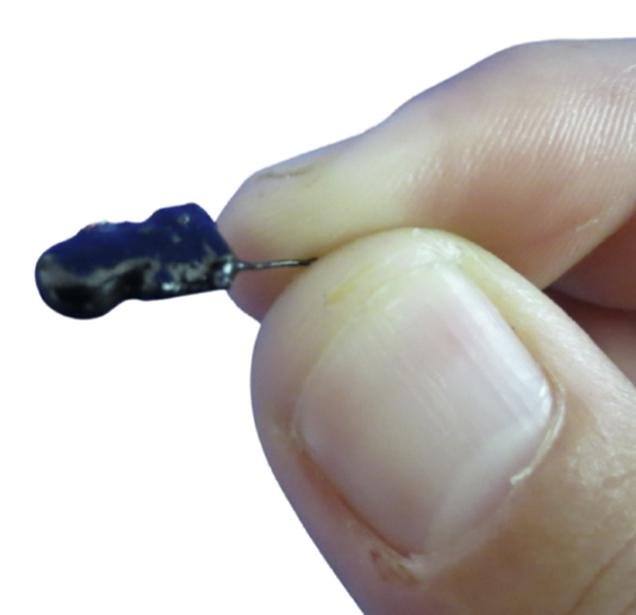
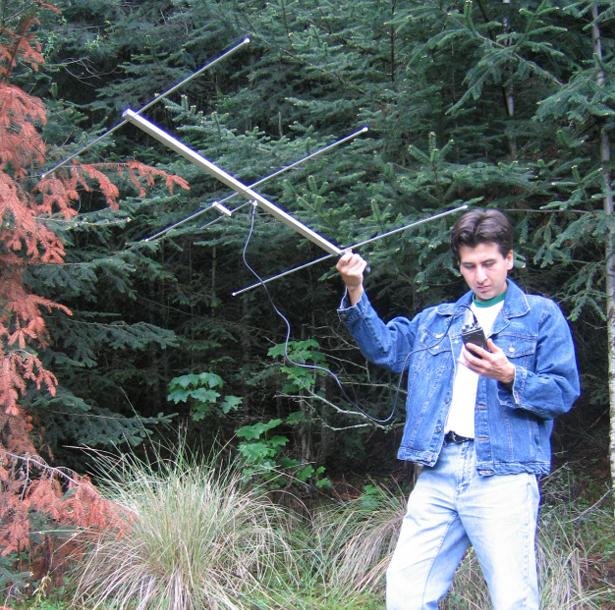
Transmitters (TX) emit pulsed electromagnetic signals at user-defined specific frequencies, alternating with silent intervals. Researchers detect these signals using a handheld receiver and a directional antenna to find the signal’s direction. Drawing lines from two different points toward the signal creates an intersection that pinpoints the transmitter’s location.
Main advantages:
- Activity, inactivity and mortality sensing may be available
- Very low power consumption
- Very small and lightweight
- Long operating life
- No extra service costs
- Direct field location at any time
- VHF localization is often included as a supporting feature in GPS-based tracking systems
Important considerations:
- Researchers must actively search for the signal whenever a location or status check is required
- Practical detection range depends strongly on terrain, vegetation, antenna, animal behavior and transmitter configuration
- VHF provides directional location information rather than automatically recorded GPS positions
- VHF Receiver and VHF Directional antenna are required
Best for:
- Survival, dispersal and presence-monitoring studies
- Cost-sensitive projects
- Species that do not move too far (from hundreds of meters to a few kilometers)
- Small species that cannot carry heavier GPS-based equipment
- When researchers can easily conduct field searches
- When low weight, long operating life is a priority
- Detect presence in the area at any desired moment